Experts Warn Distress in Part of Rent-Stabilized Housing Stock Poses Growing Risks for Tenants and New York City
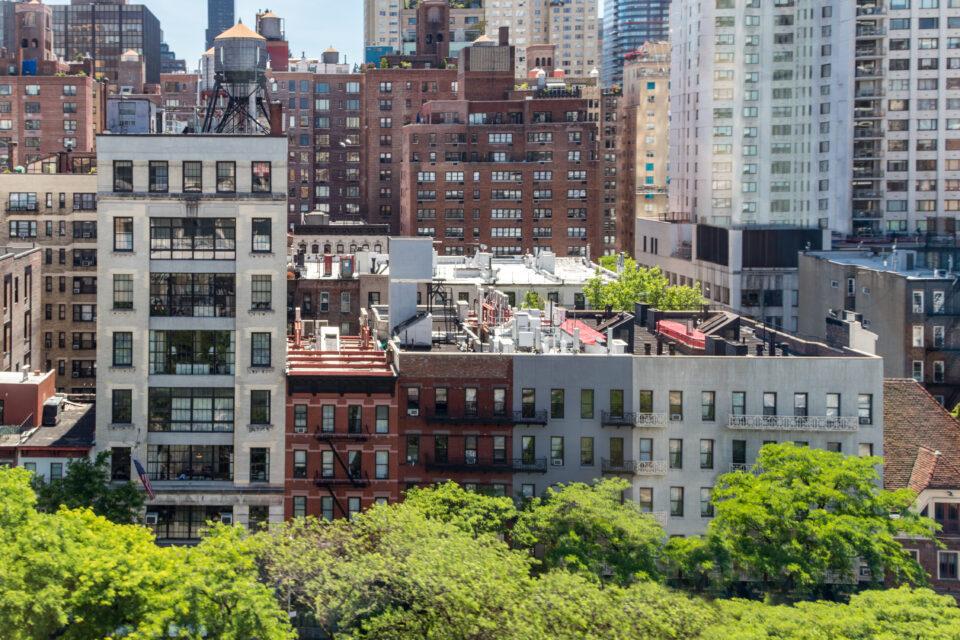
New York City housing experts are raising alarms about mounting distress in a substantial portion of the city’s nearly one million rent-stabilized housing stock, warning that financial pressures on both private and nonprofit owners could have far-reaching consequences for both tenants and the city’s broader affordable housing system.
Speaking on a panel examining the future of rent-stabilized housing hosted by the NYU Furman Center, participants stressed that while the crisis does not affect all buildings, significant subsets, including the “legacy 90% rent-stabilized properties” and “government-subsidized, income-restricted properties” examined by NYU Furman Center in recently published data briefs, are showing signs of financial and physical deterioration.
“We can all agree there is a subset of rent-stabilized housing that is distressed,” said Samuel Stein, a senior policy analyst at the Community Service Society. “The problem does not affect the entire stock, but a problem exists. What keeps me up at night is the pressure on policymakers to undo the 2019 reforms because of distress in part of the system, that may bring us back to what I would characterize as the bad old days.”
The goal of rent stabilization is to maintain three key features in the housing stock: quality, financial sustainability, and affordability. While not every rent-stabilized apartment is deeply affordable, the system as a whole serves as a cornerstone of affordability in New York City’s rental market. Despite New York City being known for its high housing costs, its citywide median rent was $1,810 per month in 2023, lower than many might expect. This reflects, in part, the fact that about 40 percent of the city’s rental homes are covered by rent stabilization. Combined with public housing, rent-stabilized homes have helped keep the overall median rent below levels typically cited for market-rate units available for rent.
Several panelists at the event underscored the challenges facing buildings, driven by a combination of stagnant revenues, rising operating costs and long-standing affordability issues—conditions they argue cannot be attributed solely to rent regulation.
“It is a multifaceted problem,” said Jane Silverman, Executive Director of Community Development Banking at JPMorgan Chase Bank. “Insurance, collections, vacancy turnover—there are a lot of different ways to view the problem, as opposed to one line of attack.”
Kenny Burgos, Chief Executive Officer at the New York Apartment Association, a former state lawmaker, said the city has yet to reckon with the potential fallout. “There are millions of families in these buildings,” he said. “I’m yet to hear what happens to them if buildings go insolvent.”
Financial Pressures Mount, Physical Distress Worsens
Operators described difficult trade-offs as rising expenses outpace rents. Emily Kurtz, Chief Housing Officer at RiseBoro Community Partnership, said owners are increasingly forced to delay not only maintenance for families living in rent-stabilized housing, but also vendor payments.
“There’s no desire to increase rent burdens,” she said, “but when rent doesn’t cover expenses, you have to make hard choices.” The result of delayed payments, she added, is a ripple effect that also undermines the services and small businesses in the local communities that rely on timely payments.
Lenders are also noticing the consequences. Silverman cited that beyond the rising deferred maintenance, there is also a risk to new projects and preservation deals. Lower net operating income and higher reserves are now standard expectations for new projects.
“We can’t assume that rents go up 2% annually and expenses go up 3% annually, it’s just not realistic anymore,” she said, noting that even heavily subsidized affordable housing stock, such as those in the LIHTC, are also barely sustainable.
Watch the Video of 11/19 Policy Breakfast
Affordability Limits and Tenant Income Supports
Panelists stressed that many rent-stabilized tenants cannot absorb rent increases, particularly in the pre-1974, 90% rent-stabilized stock—one of the city’s most affordable segments that is still home to many rent-burdened households.
“The median rent in the stock we’re talking about is the median rent of a 40% AMI household. That’s the median rent of a household in the Bronx, and just a little bit under the median renter income for Black, Latino and immigrant families in New York City,” Stein said, “We can’t just raise the rent, especially as other supports like food stamps and Medicaid are facing cuts.”
One opportunity to support tenants and owners without increasing rent burdens is rental assistance programs.“That’s why we’ve promoted programs that support tenants,” Burgos said, pointing to senior and disability rent freeze programs and federal vouchers that cap tenant contributions at 30 percent of income. Expanding such programs, he said, would stabilize buildings without pushing tenants into hardship.
The Policy Debate: Expenses, Income or Both?
With insurance premiums and operating costs rising far faster than rents, experts debated whether policymakers should focus on reducing expenses or increasing income to relieve the financial challenges facing the rent-stabilized stock.
Panelists agreed on the need to address costs. Stein pointed to longstanding inequities in the city’s property tax system, which he described as a regressive system that “overtaxes the buildings housing the lowest-income people while giving tax exemptions to buildings with the richest renters.”
Rising insurance costs, he added, are a national trend for housing and may require state intervention or even a public option.
But panelists disagreed on whether to address loss of income. “Costs are incredibly important,” Burgos said, “but they still serve as a bandaid because revenue is how these buildings operate.” Stein, however, cautioned against addressing the income side, which involves raising rents. “We’re not going to solve poverty in New York City by raising rents,” he said.
Rethinking Ownership?
Some advocates have proposed shifting distressed rent-stabilized buildings to nonprofit or public ownership. Stein argued that if owners decline well-designed programs meant to reimburse them for renovating properties, then “we need to think about alternative ownership.”
Nonprofits or public bodies may face the same economic reality as current owners, but he says “we can invest in those buildings knowing that the operators want to put the money into the buildings.”
But Stein warned that any transition would require a clearer understanding of the scale of the problem and therefore the funding required.
Burgos, in contrast, argued that the government lacks the capacity and capital to take over such a large segment of the housing stock.
“NYCHA is already in deep distress,” he said. “The subsidy required for the government to take on thousands of additional buildings would be in the billions.”
Despite differing views on ownership and policy solutions, panelists agreed that worsening distress in even part of the rent-stabilized stock could destabilize the broader housing market.
“We know what happens when buildings fall into distress,” Kurtz cautioned. “We’ve seen it before.