
Skip to content

Home Publications

Through the Roof: What Communities Can Do About the High Cost of Rental Housing in America
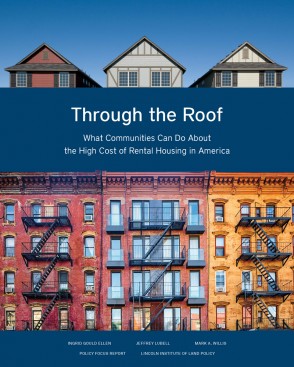
Housing affordability continues to be a major concern for residents across the country. In this report, the authors look at what local governments can do to mitigate rising costs of rental housing in the U.S. The report reviews the root causes of high rent burdens and the consequences, including the impact of housing choice vouchers and modest increases in income. It also discusses why housing costs rise, looking more closely at housing markets and the factors that contribute to rising rent burdens. The report then reviews government policy responses at the local, state, and federal level before laying out a framework that municipalities can use to help provide citizens affordable housing options. It serves as a helpful tool for local officials considering new housing strategies or those interested in improving existing policies.

Related Posts

Housing Choice Vouchers (% of occupied, privately owned rental units)

This indicator measures the share of all rental households in privately owned units whose occupants use a housing choice voucher from the U.S. Department of Housing and Urban Development. Because tenants cannot use their vouchers to rent units in public housing, we report this indicator as a percentage of occupied, privately owned rental units. The denominator consists of occupied rental housing units (that is, rental households) from the American Community Survey (ACS) minus the total number of public housing units. For more information about the calculation of this indicator, see the “Housing Choice Vouchers” section of the Methods section. Due to inconsistencies in data collection and reporting before 2009 from the Picture of Subsidized Households, the source of housing choice voucher data, we do not present this indicator before 2009.

Sources: Picture of Subsidized Households, American Community Survey, New York City Housing Authority, NYU Furman Center