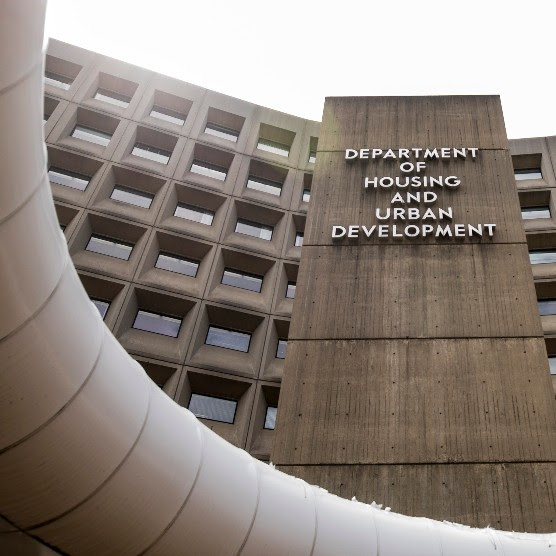
The Fair Housing Act’s Affirmative Mandate and the Creation of HUD’s AFFH Rule: Power, Promise, and Potential
The Fair Housing Act (FHA) is a powerful tool in the civil rights arsenal and has achieved a great deal, but its promise to address structural inequities that have undergirded the U.S. housing system has yet to be realized. HUD’s Affirmatively Furthering Fair Housing (AFFH) rule is an important effort to do that, reflecting new learning and a refined approach to the core challenge of remedying ongoing barriers to fair housing that perpetuate disparities. This article aims to provide details on how and why that rule was created, building on the experiences of two Obama-administration appointees involved in the rule’s creation. After providing a brief background on the AFFH mandate of the FHA, this article explains the origins and theory behind the new rule and summarizes details of the rule and key initial critiques and experiences. It ends with some thoughts on how the approach embodied in HUD’s rule could assist in ushering in a new era of equity planning.
The FHA is a robust and wide-ranging piece of civil rights legislation. As the courts have recognized, the act is designed and has been given broad application to fully achieve “the policy of the United States to provide, within constitutional limitation, for fair housing throughout the United States.” Although the act did not define “fair housing,” it applies to any entity whose actions influence housing, and is to be “generous[ly]” interpreted to allow all who might be conceivably harmed to seek its protection.”
In creating the FHA, Congress recognized that simply combating future discrimination would not be enough to overcome the history of racialized policy and practices that led to dual housing markets and what the Kerner Commission (whose report was issued less than 2 months before the FHA’s passage) recognized as “two societies” (Kerner, 1968). To achieve that goal, the FHA went beyond antidiscrimination provisions and required the Federal government to take “affirmative” steps to overcome this legacy. Specifically, the FHA imposed on the federal government an obligation “affirmatively to further fair housing,” which we refer to as the AFFH mandate. This recognition of structural inequality and racism was visionary.
Realizing the potential of this aspiration in the 50 years since the FHA’s passage has been a halting process, with many fits, starts, and backtracking. Efforts to implement the AFFH provisions have met a host of political, programmatic, and other roadblocks that prevented significant advances and led to what some commentators have termed a “fundamental imbalance in [the act’s] statutory missions” (Davidson and Penalver, 2018). The problematic track record with the AFFH mandate stands in stark contrast to other areas of the FHA, where those charged with implementing and enforcing it have operated with great dexterity to adapt to changes in the housing field. One continuous question is whether the learning and adaption that have enabled the FHA to remain relevant in other domains can occur with AFFH.
One should examine the AFFH regulation against this backdrop in both ambition and approach.