
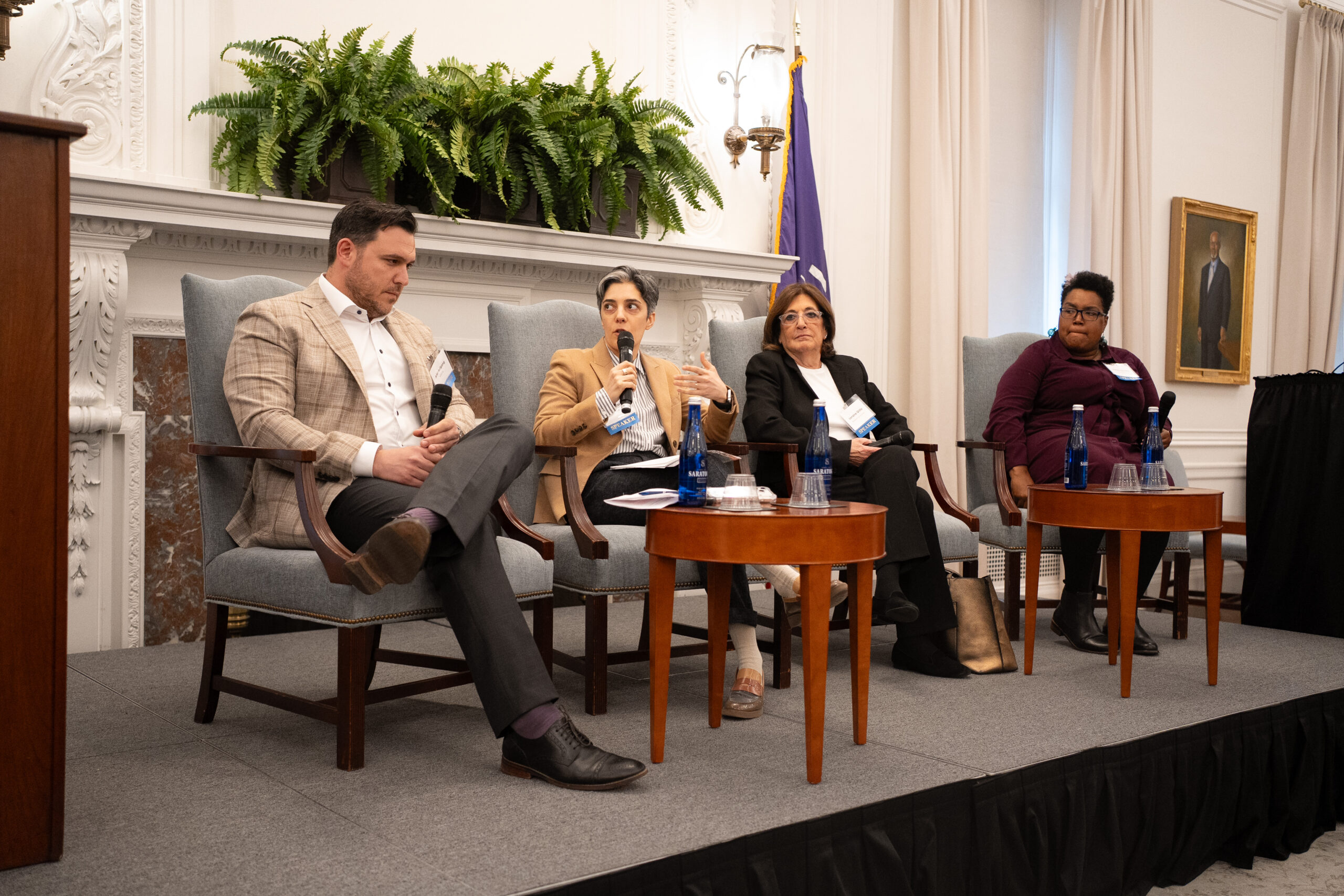
New York City’s housing experts are optimistic about the city’s plan to build new housing on city-owned lands, but emphasized the need to tailor housing development to the characteristics of each lot and the neighborhood surrounding it.
On his first day in office, Mayor Zohran Mamdani signed Executive Order 4 establishing the Land Inventory Fast Track Task Force (or “LIFT” Task Force) to facilitate the creation of new housing by reviewing sites owned or controlled by the city or an affiliated entity to determine whether the lots are suitable for development. The goal of the Task Force, which consists of representatives from city agencies and other public institutions, is to develop strategies and find sufficient land to support at least 25,000 new housing units over the next 10 years.
To better understand the landscape of city-owned land, the NYU Furman Center released four interactive maps to shed light on the location of and potential suitability of development by examining four different categories of parcels Our data analysis reveals that the city owns or leases more than 15,000 parcels totaling 2.2 billion square feet of land, but not all of this land is easily developable. The diversity of uses on these lots also underscores the need to avoid a wholesale approach to development on city-owned lands.
“There’s not going to be a one size fits all approach to this,” Leila Bozorg, Deputy Mayor for Housing and Planning, said at NYU Furman Center’s Policy Breakfast event on April 22. “I think people want to say that public land should be used for x, public land should be used for y. It really is much more complex than that.”

Vacant Sites Are Hard To Find And To Build On
Panelists agreed that the easiest sites to build housing on are those without any current use. However, building on existing vacant lots still presented a number of problems, starting with the fact that only 20 percent of City’s owned lots are vacant.
“The mostly vacant sites are obviously easier to build on, but they are harder and harder to come by,” said Bozorg, highlighting the gap between public perception and the reality of the city-owned parcels. “I can’t reinforce enough how often we hear people say, ‘There’s all these vacant city-owned sites that you could be using for housing, and you’re not.’”
A major challenge is the suitability of building housing on the vacant city-owned lots. For example, the NYU Furman Center’s analysis found that 70 percent of vacant lots are smaller than 5,000 square feet, making multifamily housing development difficult.
Other lots include larger former industrial sites, which panelists noted mean costly changes to make them suitable for residential living and to sustain a functional neighborhood.
“You just have cost upon cost of cost before you get to the idea of affordability mix, and the cost to build the housing itself,” said Lindsay Greene, Chief Executive Officer of Brooklyn Navy Yard.
Lorraine Grillo, Chief Executive Officer of Bradford Construction Corporation of New York and Former First Deputy Mayor of the City of New York, said the city also needs to consider the area surrounding an empty lot and its ability to sustain a thriving, healthy community.
“My experience tells me that one of the most critical pieces for developing on city-owned land is really location, location, location.” she said.

The Tradeoffs Of Development
Bozorg emphasized that the goal of the task force is not only to address the affordable housing crisis, but also to meet broader community goals and citywide goals.
“We don’t have an endless capital budget, we have constrained resources and so there’s really difficult trade-offs that we have to make,” she said.
One trade-off panelists discussed was the development of affordable housing on city-owned land currently used for cultural and recreational purposes. These types of lots are a plurality of city-owned land, comprising 40% of all parcels. Panelists agreed there needs to be a balance between housing development and continued access to important community spaces.
“When it comes to open space, we need to be very careful to make sure we’re not creating the condition to just pit open space against housing,” said Bozorg, who also noted the existing inequities in access to open space across the city.
Ariel Aufgang, AIA, Principal at Aufgang Architects, suggested that the city could consider different models for recreational space to advance housing development goals. “Mixed use is one way of really responding to that need to maintain recreational non-residential space for public use and open space as well,” he said.
Costs and Procedural Requirements Can Add Up
Panelists also noted that while there were challenges specific to developing on city-owned lands, there were also broader cost and procedural inefficiencies in the construction and development process that made housing development on these lots more difficult.
The State Environmental Quality Review process, capital processes, and the soft costs involved in development all add time and costs to building housing. Panelists agreed that these inefficiencies were worsening the housing crisis. “I have seen situations where architects and construction firms have been waiting years for their final payments. It has to change,” said Grillo.
At the same time, some panelists also noted that procedural requirements were important for achieving the goals of the Task Force beyond housing development, such as those of the community surrounding city-owned lands. Bozorg stressed the need for thorough community engagement processes, particularly in relation to NYCHA-owned land. “Much of the success of what can happen on NYCHA campuses is driven by meaningful and good community engagement with tenants,” she said

Creativity Can Help Overcome These Challenges
Despite agreement on the challenges of building on city-owned land, panelists said that these could be overcome by being creative. For example, Greene highlighted how the Navy Yard has welcomed different industrial tenants, who’ve moved to make room for housing at their old sites. Clustering industrial sites together, she suggested, could free open larger parcels of publicly-owned land and facilitate the development of neighborhood and community amenities around housing.
Aufgang also suggested that the selling of air rights could be used to generate revenue that could advance both commercial and housing development goals. “I think that there really has to be an approach that takes everything into account,” he said.