NYU Furman Center Co-Faculty Director Vicki Been Submits Testimony on the Charter Revision
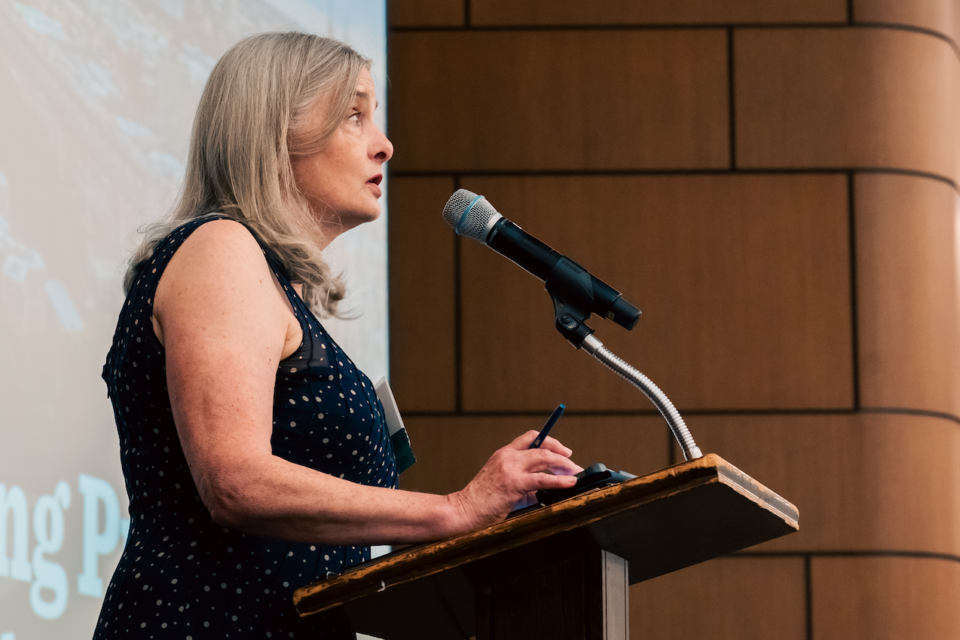
NYU Furman Center’s Co-Faculty Director and Former City of New York Deputy Mayor Professor Vicki Been testified on February 11 before the New York City Charter Revision Commission, presenting a data-driven framework for assessing reforms to the city’s land use process and its role in exacerbating the city’s housing shortage and affordable housing crisis.
Using data, Professor Been illustrated how persistently high rent burdens, declining population due to net negative domestic migration, and an inadequate housing supply are evidence of New York City’s long-standing housing affordability challenges. To frame these issues within the commission’s purview, her testimony focused on outlining the obstacles to housing production that derive from the New York City Charter, including the Uniform Land Use Review Procedure (ULURP).
In her testimony, Professor Been summarized three of the five major steps of housing development, occurring before construction begins, and which include both informal negotiations and procedural requirements set forth in the New York City Charter. While a portion of these three steps fall under the Uniform Land Use Review Procedure (ULURP), Professor Been also highlighted challenges that arise even before the ULURP process begins, including around site selection and environmental review, as well as the associated timeline and risks of the formal ULURP process.
The city’s land use rules and revie procedures are one factor that has led to the inadequate production of market rate and affordable housing. While much of the city’s development is said to be “as of right,” the NYU Furman Center estimates that nearly one-third all new multifamily housing units completed between 2010 and 2023 required rezonings (private site rezonings or neighborhood wide ones), demonstrating that discretionary approvals are key to unlocking housing production.
“Improving upon the system requires that you examine every step in the timeline of development, and interrogate which features of the land use review procedures and other agency reviews are contributing to delay, uncertainty, and cost at each step,” said Professor Been, in her written testimony. “That focus will allow you to prioritize the major sources of delay and uncertainty, and may open up new ways of thinking about how to solve those problems.”
Housing Development in New York City Timeline

The key risks across the three phases outlined in Professor Been’s testimony include:
- Developers must make high-risk, upfront investments before elected officials commit to supporting a project.
- Local council members have de facto veto power, often rejecting or scaling back projects based on local opposition, even when the development would benefit the city as a whole.
- Uncertain timelines for inter-agency coordination lead to potential delays.
- Environmental reviews and mitigation requirements may result in unexpected expenses and litigation risks.
- Council member deference often results in projects being rejected or cut back due to local opposition, even when they meet citywide needs.
- Approval of ULURP actions may be de facto conditioned on demands outside the land use review scope (e.g., labor requirements, community benefit agreements).
“Given the long timelines, regulations, market conditions, or [that] affordable housing appropriations can change drastically, creating an overall risk that what would have been feasible to develop earlier in the process might no longer work,” said Been. “The longer the timeline, the greater the risk that the project won’t be viable once the project is certified.”
Professor Been said it can take anywhere between four to six years from when a project is first proposed to when construction begins. The time required adds enormous expense, adding to a project’s overall total development cost, and making every unit more expensive to develop. Developers, she said, wind up having to make riskier upfront capital investments and pay for expensive analyses even before a council member commits to supporting the project.
Another outcome that Professor Been focused on was the geographic disparities in actual housing development, which result from a system that allows for local concerns to be prioritized over citywide needs. To support this, she cited NYU Furman Center analysis showing that just ten of the city’s 59 community districts with only 13 percent of the population, was responsible for 48 percent of the housing stock growth between 2010 and 2023, while half of the city’s community districts, with 57 percent of the population, added only 21 percent of the housing stock growth between 2010 and 2023.
Read the full testimony here.